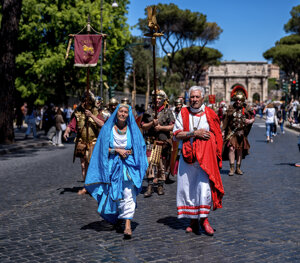
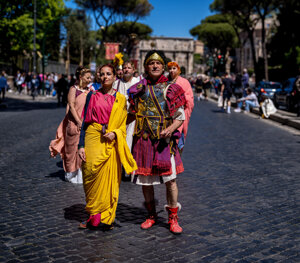
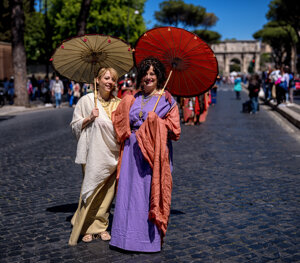
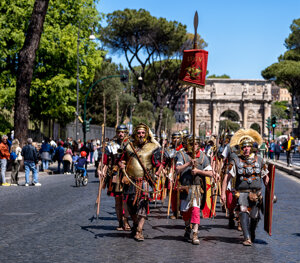
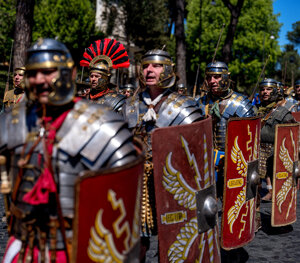
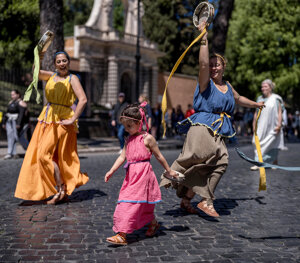
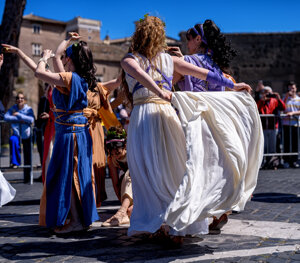
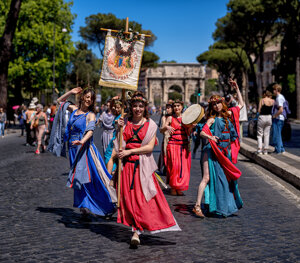
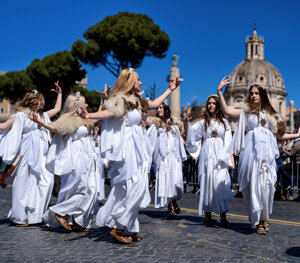
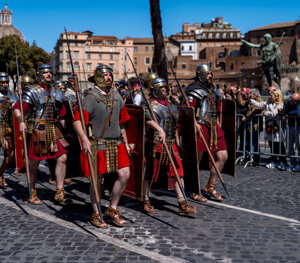
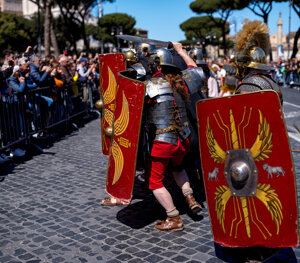
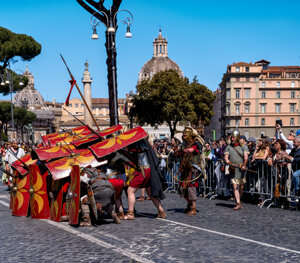
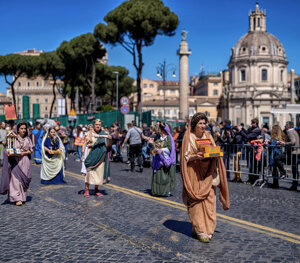
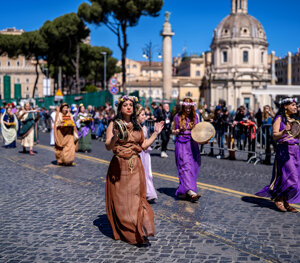
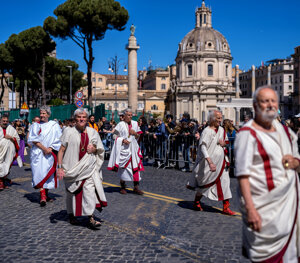
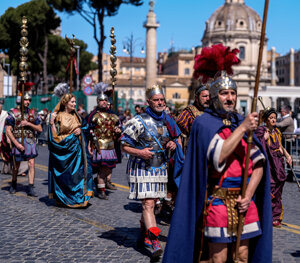
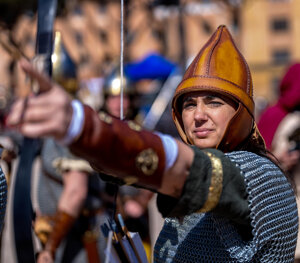
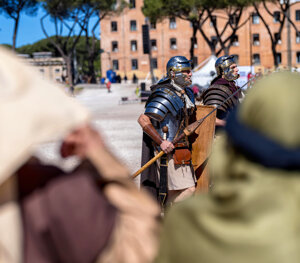
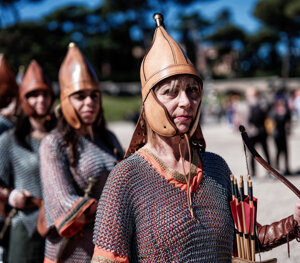
ROMA REGINA VIARUM: DIES NATALIS 2777 a.V.c.
Celebrating the Birthday of Rome by shooting in color medium format

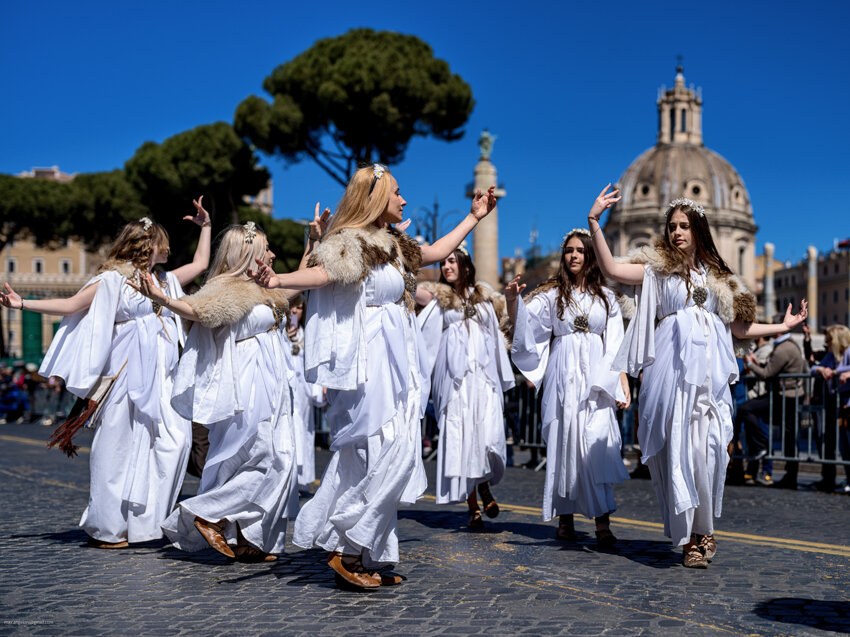
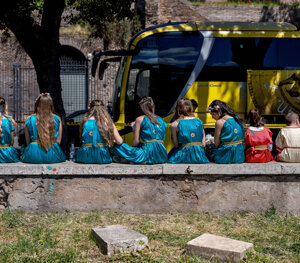
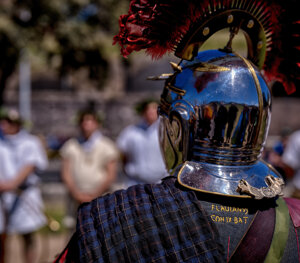
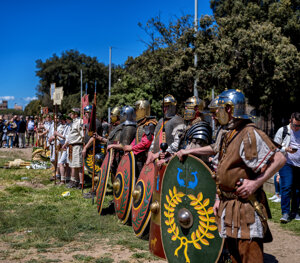
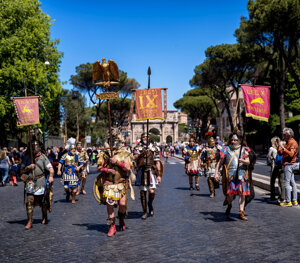
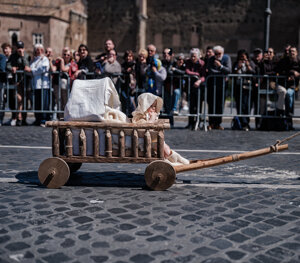
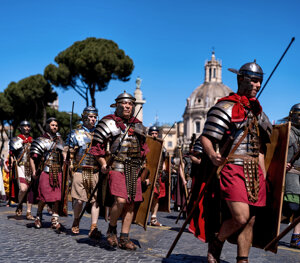
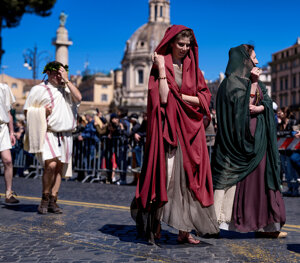
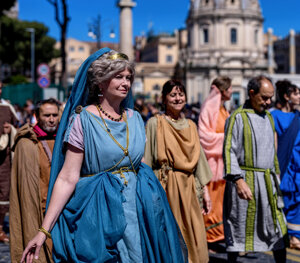
Rome turned 2777 years old.
This year, the Sunday dedicated to the celebrations fell exactly on April 21st.
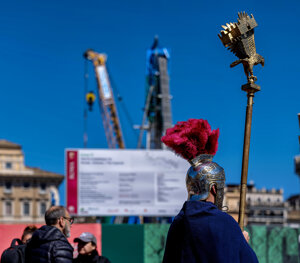
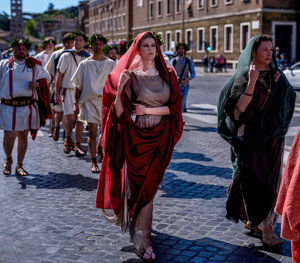
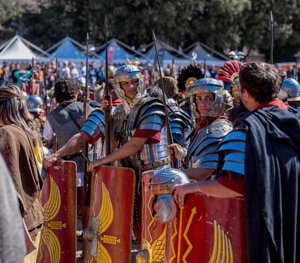
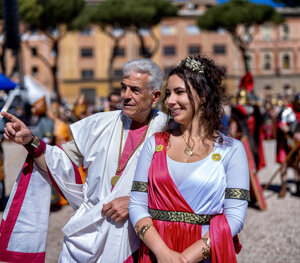
I have been following this event for more than a decade and have always photographed it with different photographic equipment in an attempt to give a new interpretation of the festivities each time.
The fluctuating weather conditions of this unusual April provided a cool day and a clear, bright light.
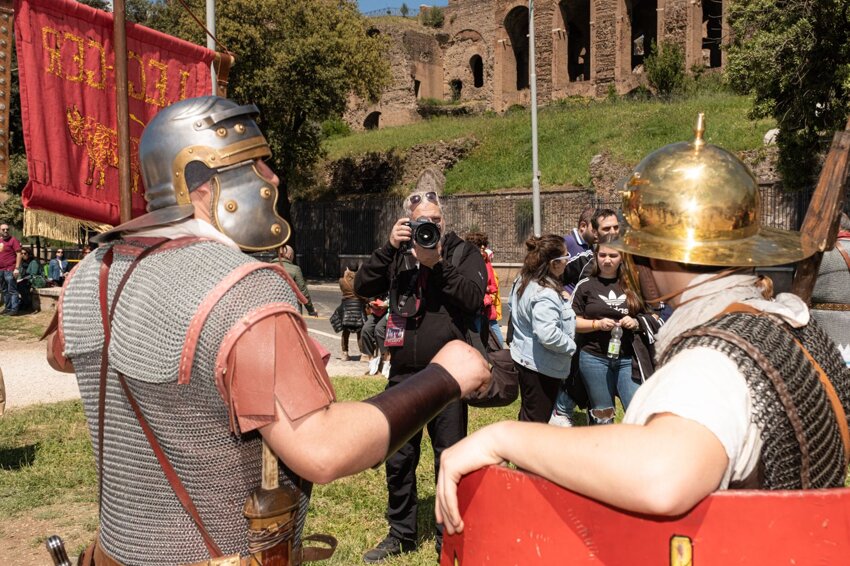
©Max Angeloni - All rights reserved
Photo: Valter Ventrone
What better occasion to take advantage of all the exuberance of the Fujifilm GFX 100 and its 16-bit color raw files.
Always, however, respecting the usual rule: one camera, one lens, and nothing more.
This rule was also respected by the participants of the FotoLight School of Photography courses, who had the opportunity to put into practice everything they learned during this academic year.
Batteries charged, Fujifilm GF 55mm f/1.7 R WR mounted, Provia selected, let's start shooting.
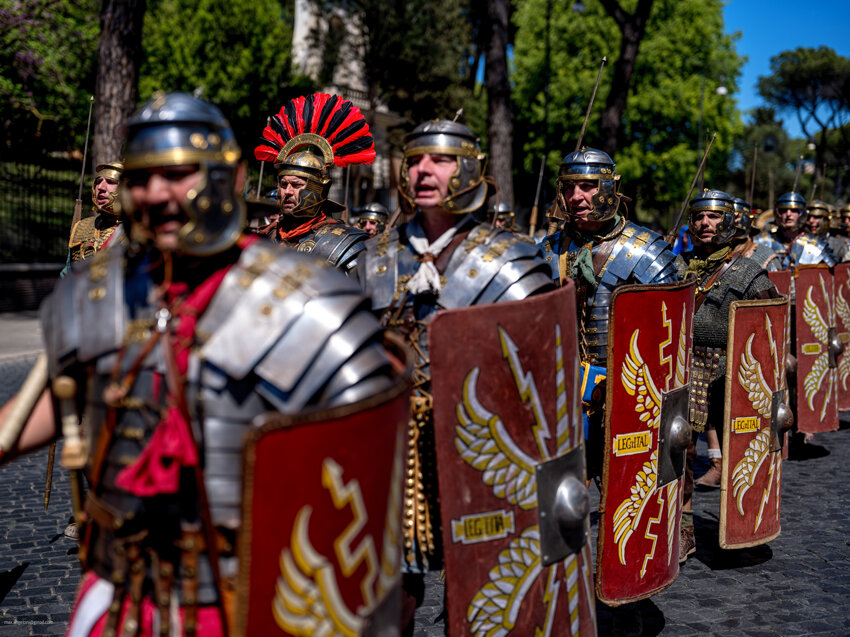
The celebrations lasted 4 days but my reportage concerns only the day of the historical parade.
The numbers for this event are impressive. I am providing a rough estimate just to give an idea of the scale of this event.
RE-ENACTORS PARTICIPATING: 2,000.
72 ASSOCIATIONS COMING FROM:
SPAIN, FRANCE, ALBANIA, GREAT BRITAIN, BELGIUM, GERMANY, SWITZERLAND, AUSTRIA, HUNGARY, POLAND, CZECH REPUBLIC, ROMANIA, BULGARIA, GREECE AND ITALY.
AUDIENCE PRESENCE:
CIRCUS MAXIMUS ABOUT 40,000
ALONG THE PARADE ROUTE, THE AVERAGE PRESENCE OVER THE YEARS HAS BEEN 350,000 SPECTATORS.
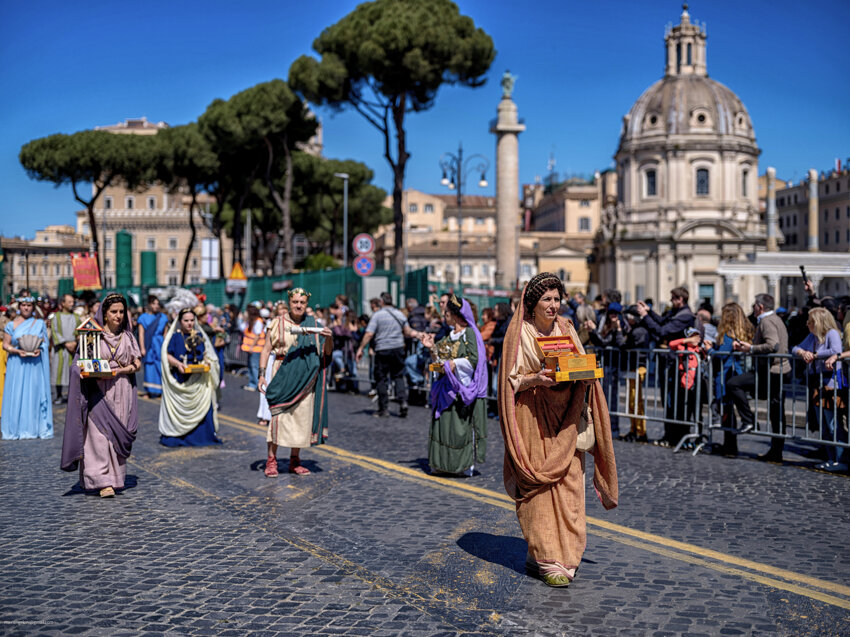
As with every edition, the celebrations are dedicated to a person or a symbol who has left a legacy whose importance has been passed down to our days.
For the 2024 Natale di Roma, the roads have been chosen. Yes, Rome Queen of Roads. It's no coincidence that "all roads lead to Rome."
Here is an excerpt from an in-depth article that you can find in full on the pages of the Gruppo Storico Romano (https://www.natalidiroma.it/programma).
Let us always remember that it is always nice to pick up our camera to take a picture of something interesting. But it is certainly better to be aware of what we are photographing.
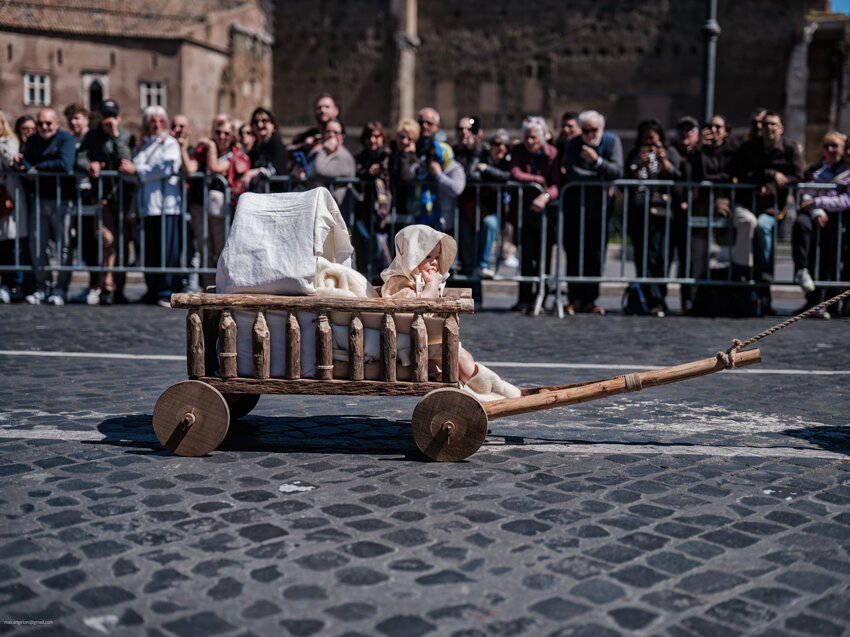
(...) We have now reached the XXIV edition of the celebrations for the Natale di Roma organized by the Gruppo Storico Romano. The figure to whom the G.S.R. has decided to dedicate the 2024 reenactment program is the most imposing and significant symbol of the entire Roman era: THE ROADS.
"The Roman roads are a factor of incalculable importance in the very history of humanity. Rome became a mobile source of civilization and the ruler of the world precisely because, through its roads, it managed to systematically control a large part of the earth's surface. From the 'Golden Mile' (Miliarium Aureum) of the Forum, on which the distances were marked, nineteen paved roads led to each of the provinces of the Empire. Running uninterruptedly as far as the Rhine and the Danube, they reached the lands of the Scythians on the shores of the Black Sea, the Euphrates, Africa, Arabia, and even India.
The nineteen original roads branched out, growing and multiplying in space and time until, under the reign of Domitian, Rome found itself administering as many as three hundred and seventy-two. Roman engineers did not try to avoid the natural obstacles of the terrain; they faced them, sometimes even forcefully. If they encountered a river, they crossed it with a bridge; if they found a swamp in their path, they turned the road into an embankment. Their roads zigzagged across the Alps, piercing them with tunnels where there was no other solution. The threat of water was eliminated by trying, where possible, to bypass it. Before starting work, the builders prudently ensured that the ground was dry. Rome continued to build roads for eight centuries. Then, as is the fate of all empires, the end came for her as well. But by then, her engineers had paved the world.
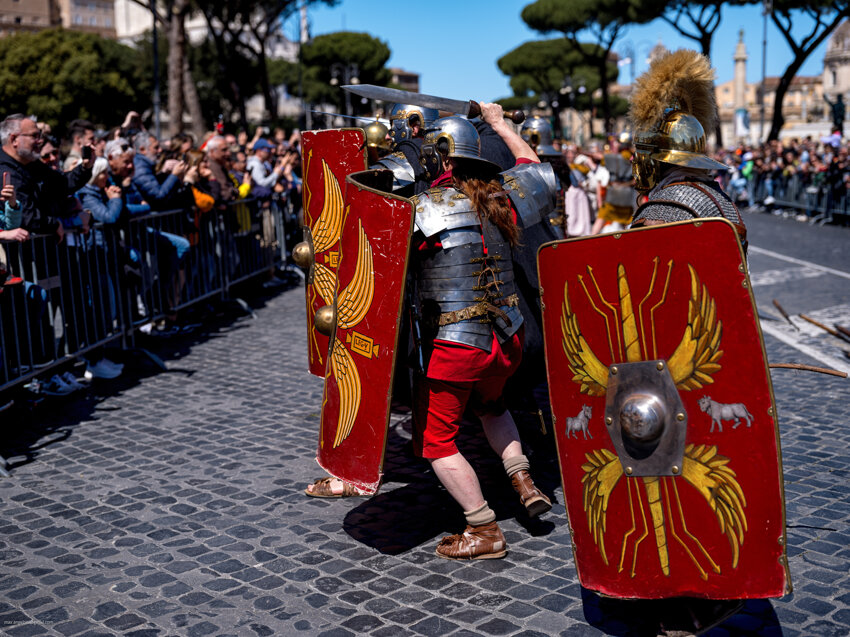
The roads of the Romans, the "consular roads," are considered among the most glorious and enduring achievements of Ancient Rome. There were about 100,000 km of paved and safe roads and another 150,000 km of dirt roads, but wide enough and suitable for carts. The width of each road was about 5 meters, so that two carts could pass side by side without damage. However, the first road builders on Italian soil were the Etruscans. The Via Clodia at least partially retraced an important Etruscan route that connected Caere (Cerveteri) to Volsini novii (Bolsena), and the Via Cassia, from Rome to Cortona, was originally Etruscan, as was the Via Aurelia, which ran along the Tyrrhenian coast. The Etruscans, however, limited themselves to using compact tuff, while the Romans used flint, much harder and more resistant, the so-called Roman paving stone.
Among the Romans there were various types of roads, from roads made of logs, to roads dug into tuff as the Etruscans did (but which the Romans later repaved), to cobblestone roads (galeratum), to roads paved with Roman paving stones, the most resistant of all. The term "viae" referred to the extra-urban roads that started from Rome, while "strata" (meaning made in layers) were those within a settlement.
The roads had to last a long time and their construction, carried out by soldiers if in foreign territory, was very meticulous. Many roads in Italy, Europe, Africa, and the East are still used following the original route: only the large highways, built in the 20th century, a necessary choice due to the exponential increase in traffic, have allowed for greater mobility, relegating the great consular roads to handling local traffic.
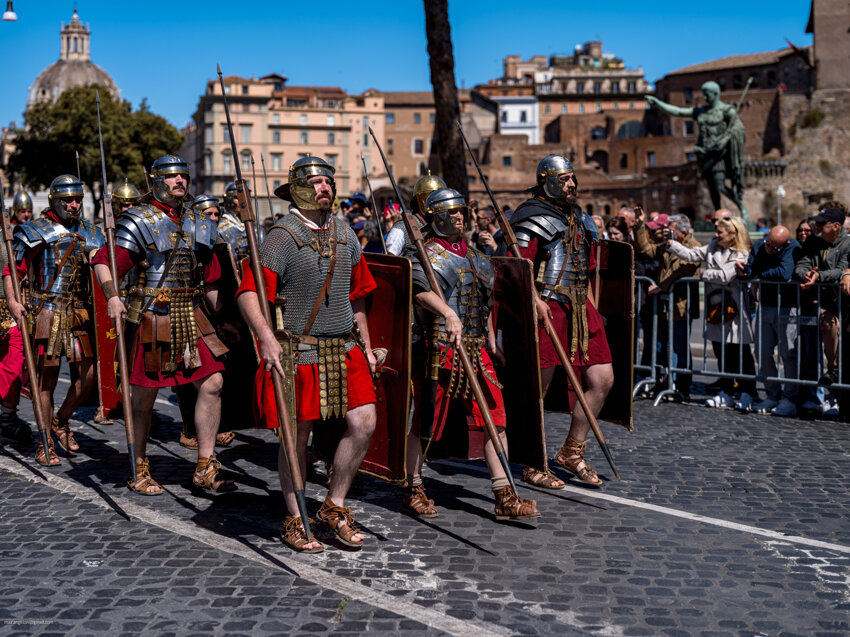
Built mainly for military purposes, they allowed for the rapid movement of troops and goods between places very far from each other, also contributing to the remarkable development of commerce, which was so important to the Roman economy. The mobility of the troops was one of the strengths of the Roman army; as they advanced, conquering new territories, they built roads: the Roman legionary was not only a soldier but also a builder of roads, bridges, and tunnels, according to the specific knowledge he had.
To the 100,000 km of paved roads at the time of the Empire's greatest expansion, one must add a myriad of secondary roads and unpaved branches: it is estimated that the total road network must have reached a total length of over 200,000 km.
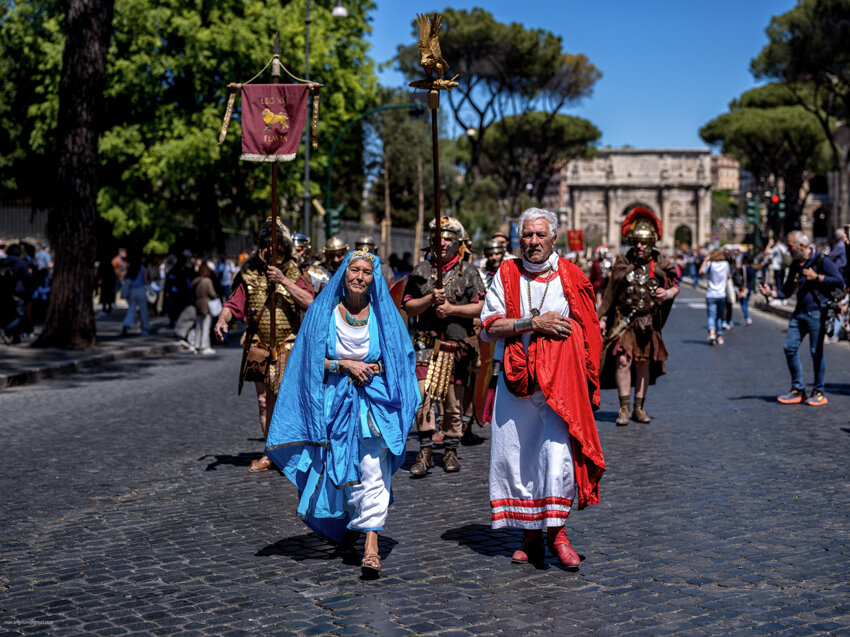
The Romans distinguished:
- the via, where it was possible to travel with carts, thus allowing the passage of two carts at the same time in opposite directions (hence the term carriageway).
- the actus, where one could travel only on foot or on horseback, about half as wide as the via, from the iter, where one could go on foot or in a litter but without using animals.
- the semita was then a semi-iter, smaller.
- the callis, a small path among the mountains.
- the trames was the crossroad of another road.
- the diverticulum, a road that branched off from the consular road to reach a locality.
- bivi, trivi, and quadrivi for road intersections. They were then divided into: public roads, called praetorian and consular, depending on whether they were built by a praetor or a consul, and private roads called agrarian.
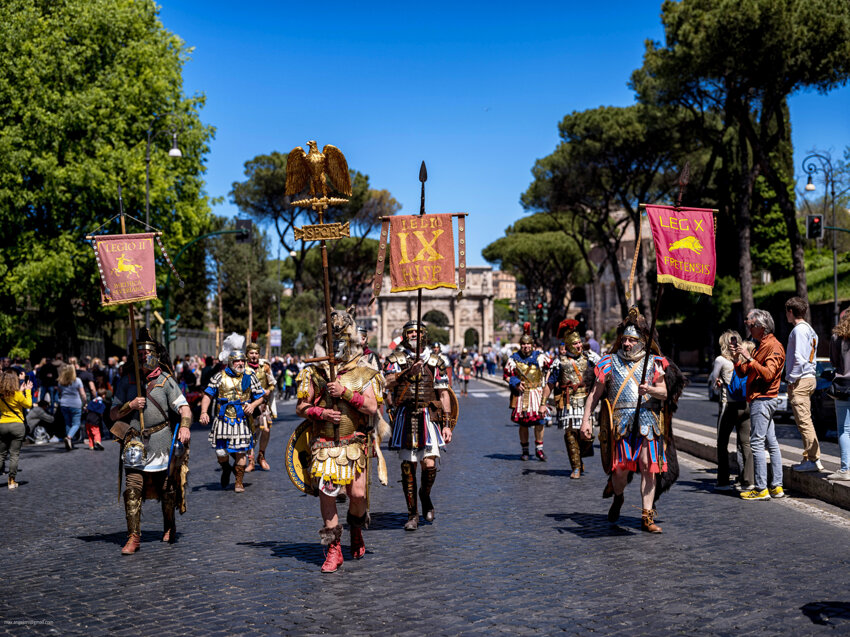
It is believed that the Romans inherited the art of road building from the Etruscans, improving the method and materials. In fact, several Roman roads followed Etruscan roads, for example the Via Flaminia through the ager veientanus and faliscus, or sections of the Claudia dug into the tuff and later repaved by the Romans, or the Pietra Pertusa road that connected Veii with the Tiber, or sections of the Aurelia which follows the Tyrrhenian coast up to Pisa, or of the Cassia, Armerina and Flaminia.
Congratulations Rome, Queen of Roads
Photos taken in RAW 16 bit developed with Adobe Lightroom Classic v. 13.2 and Nik 6 Color Efex.